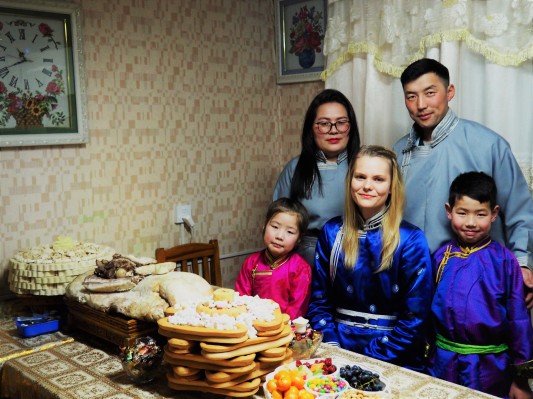
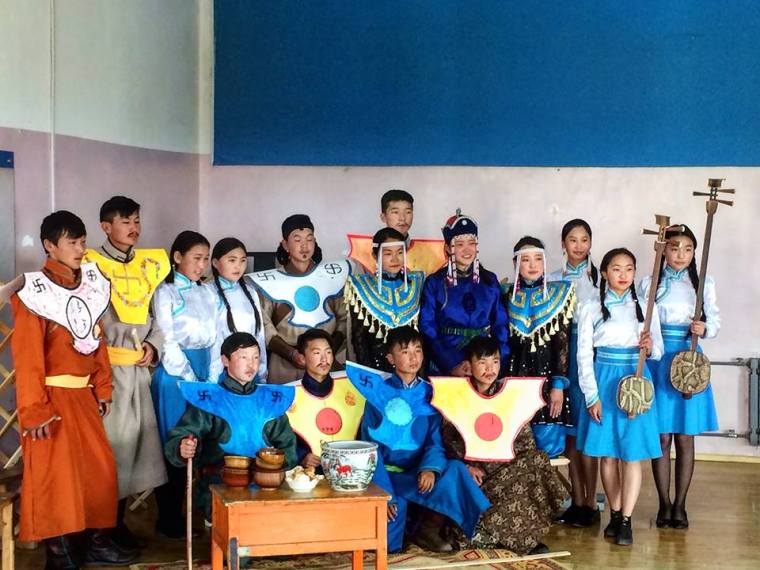
Mongolians sure know how to put on a performance. A night of dancing and singing in traditional Mongolian dress.
Author: TravelwithAnna13
A citizen of the world.
Never settle. fat and happy.
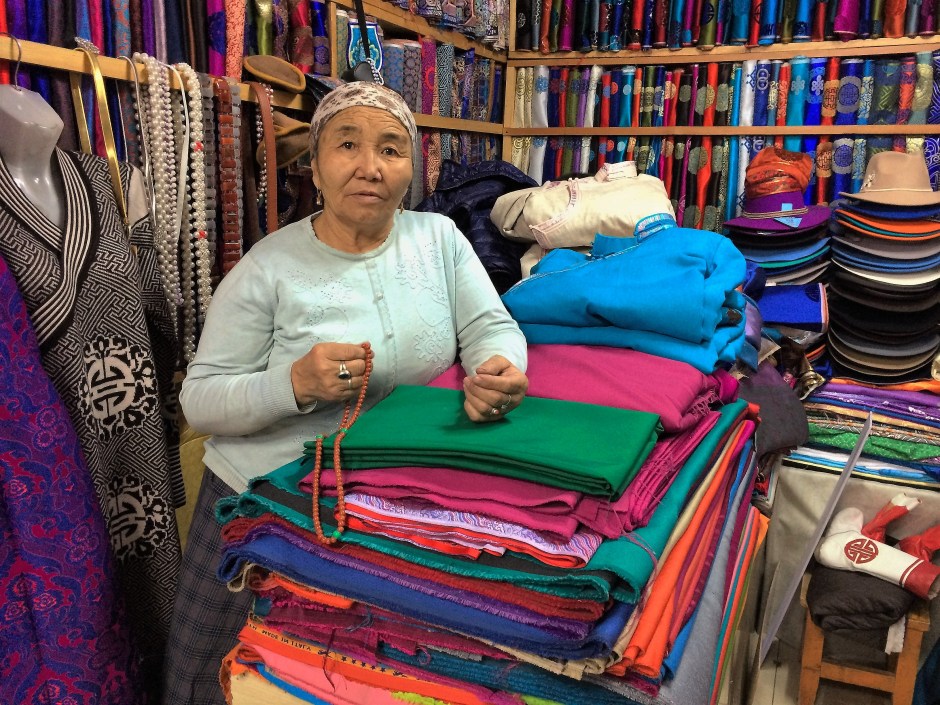
The Mongolian Deel
If it weren’t for Chinggis Khan and his Golden Horde that took the world by surprise in creating the world’s largest empire, the world might know absolutely nothing about Mongolia. Dwarfed between two colossal sized countries, China and Russia, Mongolia has quietly endured its own ruthless past that came to an end when the Soviet Union collapsed in December 1991.
Since arriving in Mongolia in May 2016, I have encountered and participated in many Mongolian traditions and customs such as drinking milk tea, eating Mongolian food, playing shagai, partaking in the Nadaam festival, and buying and owning my own deel.
For this post, I will focus on the Mongolian deel. For centuries, Mongolians have worn deels. With a sheep- wool lining inside, deels have kept Mongolians warm during the harsh winters. Easy to put on, a deel can be pulled over and pulled at the waist using a belt and small clasps on the side. You can find deels in a variety of colors. Most notably are the colors blue, red, yellow, green, and white. Blue represents Mongolia’s blue sky. After all, Mongolia is known as the Land of the Eternal Blue Sky. Red symbolizes fire; white symbolizes milk; green symbolizes the Nine Stones; yellow is a symbol of the Dali Llama’s yellow robes.


The Buddha’s followers compiled his teachings into books – most notably, the Kangyur. In the 1650s, the Mongolian monk, Zanabazar, brought a collection of the Kangyurs into Mongolia from Tibet. Today, 10 different types of Kangyurs are safely preserved in the National Library of Mongolia. One notable copy was written with 9-precious stones: gold, silver, corral, pearl, mother of pearl, turquoise, lapis lazuli, copper, and steel. All stones were crushed into a powder and mixed with water and goat’s milk for ink.
Now in 2016, deels come in an assortment of patterns, some subtle while others can be very eye-catching. Some possess intricate details on the sleeves and collars, can have wide sleeves or thin sleeves, and more colors have been introduced such as purple and pink. Styles have also evolved from the traditional Mongolian deel to a more Chinese inspired deel.

There are many different types of deels distinguished by its cut, color, and trimming. Each ethnic group has their own type of deel. They can be long or short. They can be one piece or two piece and made from different materials. Silk from India, Japan and China are popular. Most notably are the winter and summer deels. Winter deels are thickly padded to keep out the chill.


On the second floor inside an old building in the market, I found Nachagnyam’s deel store. She has been making deels since 1992. She learned the skill from her mother. Beginning first with smaller deels for children, called a баривч (barevch), she has worked herself up to making a variety of deels for everyone. Now she works with a team of young women. When I asked how long it takes to make a deel, she said that it can take one to three days depending on the style. Nachagnyam then said that she wants to see more people wearing deels, most notably the younger population. In a much smaller deel store, Yanjmaa also believes more people should wear deels. She claims they are necessary for survival and a deel belt can keep a person’s stomach and kidney warm.


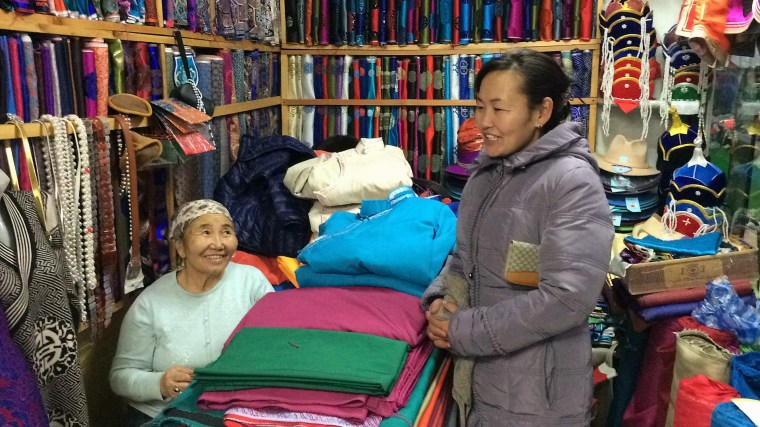
In Ulaanbaatar, it is seldom when you see a person walking down the street in a deel. Now, it is usually the herders and folk from the county side who wear a deel. With Ulaanbaatar undergoing much construction in becoming a modern city, a gulf has opened between the modern age and the traditional age: from living in gers to moving into houses and apartment buildings. From wearing deels to sporting western clothing. However, Mongolians haven’t entirely severed their ties to their country’s history. During major holidays, such as Naadam and Tsagaan Tsar, Mongolians return to their roots and pay homage by wearing deels while celebrating with friends and family.
My blog post is based on my previous knowledge from what I have read about Mongolia, what I have seen during my stay, and from what I have heard when speaking to Mongolians. This is not intended to be a thoroughly researched article but something that I wanted to do due to my own fascination and interest.


From Thanksgiving to Christmas
I hope everyone had a lovely turkey day! I on the other hand, felt very ill and was coughing up a lung by the time Thanksgiving rolled around but I managed to roll out of bed to celebrate. On 23 November, my site-mate Jenni hosted a Friendsgiving at her apartment. We managed to squeeze 12 people into her small apartment. This was only done by lifting Jenni’s mattress up against the wall, bringing an extra hot plate, stools, and having her counterparts bring their own bowls and forks. For the third year in the row, I was in charge of the mashed potatoes – mainly because I might poison all 12 people if I bake or cook something.

Then on 25 November, we hopped onto a bus from Ulaanbaatar that took us west to Bayankhongor. We felt like hitchhikers as we waited with our backpacks at a gas station for the bus. Another Friendsgiving was held that weekend as we celebrated with our friends, sang karaoke, went dancing, and saw some dinosaurs.


At the beginning of December, all Peace Corps Volunteers and our counterparts traveled to UB for an In-Service Seminar held at the Park Hotel. The purpose of this? To strengthen work relationships between PCVs and counterparts. Our schedule was packed leaving no time to venture outside. We had Mongolian language class; TEFL (Teach English as a Foreign Language) training; various sessions such as critical thinking in the classroom, running camps and clubs, classroom management and interaction, empowering people with disabilities, and gender equality and empowerment, plus many more. Sometimes we were together with our counterparts and often we weren’t. This went on every day from 7am to 7pm. I also still had my cold and was coughing incessantly. So much that I pulled a muscle.
It was an exhausting week with some wonderful moments:
- Since we went our separate ways during the summer it was exciting to see everyone again. There were hugs all around! The next time we meet again will be in August 2017 for Mid-Service Training.
- My training group from the summer got together nearly every day for meals. Friday night, we went out to the Royal Irish Pub and were joined by our technical training and language teacher.
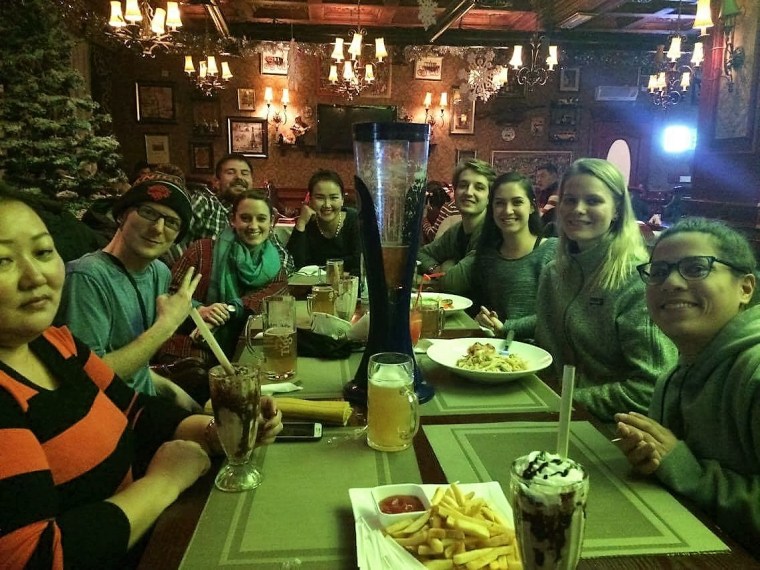
- Staying in a hotel means a larger bed, no cooking, and a hot shower! The last time I had a hot shower was during staging in Seattle. I took 20-minute hot showers every night.
- On our last night, a small group got together and we sang Christmas carols together as Keysel played his ukulele.
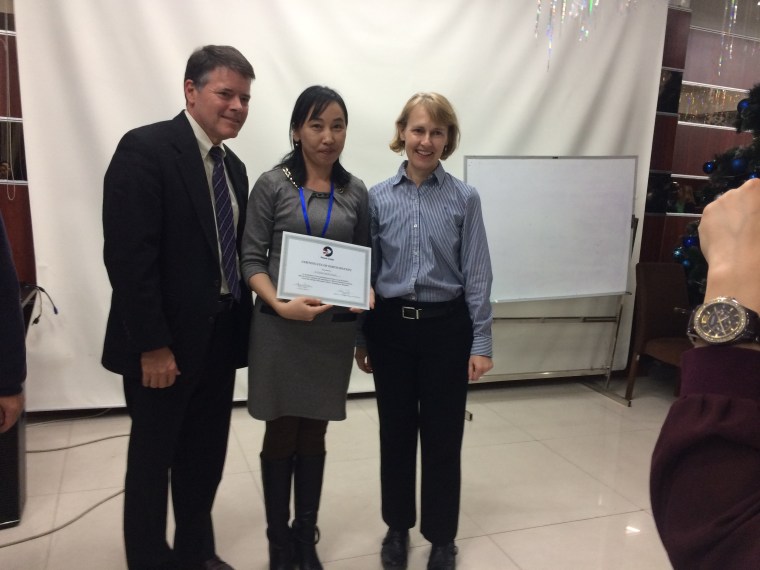
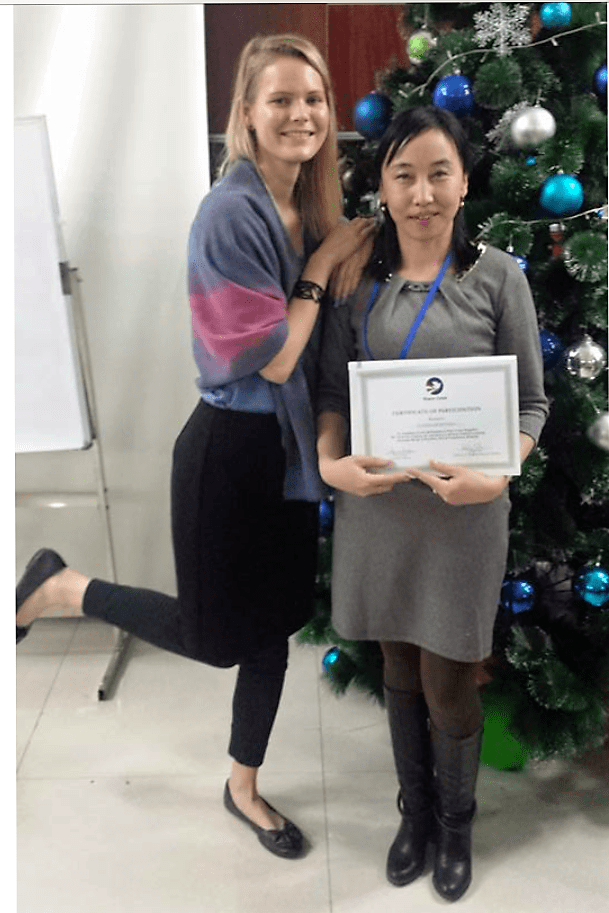
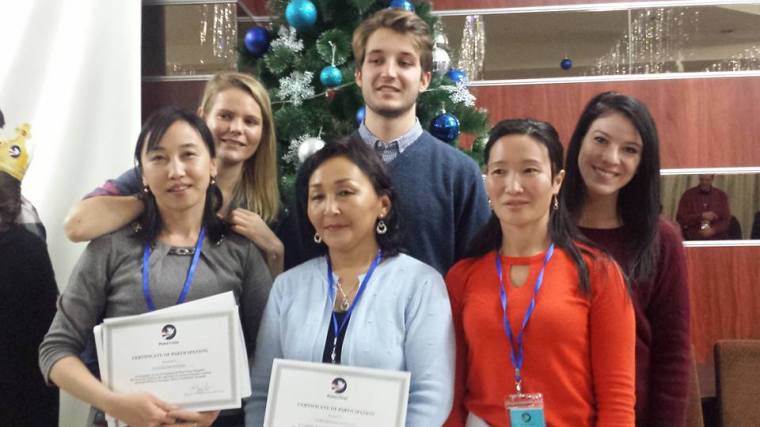
Now I’m excited for Christmas. I went on a wild goose-chase as I searched high and low to find Christmas lights in my aimeg. I got lost in a labyrinth-of-a-building and when I finally found an exit, I saw a man selling lights at his stall right outside. Now, my apartment is twinkling with red, blue, and green lights hanging over my window and bed. My stocking is hanging on my door and my advent calendar from home is propped up on my coffee table.

Good things have happened but I have had my frustrations as well. Let me first tell you about my apartment. The repair man has become my new best friend. He has had to replace my radiator which exploded while I was away in Khentii and then he had to replace a radiator in my bathroom which exploded while I was away in Bayankhongor. Then when I came back from UB, my bathroom was leaking again. Notice a trend here? I finally told the repair man to just switch off the heating going into my bathroom because I just can’t be bothered anymore.
An immigration officer paid me a surprise visit at my school. She demanded my passport and my alien card. Like I just casually carry my passport around wherever I go. Then she said that she wanted to take it away with her to which I firmly said no and made her take a photocopy instead.
Trainwreck was an awful movie. So much hype of people telling me how funny Amy Schumer is.
I get really depressed when I see injured dogs and puppies limping on the streets.
Lesson planning can feel a lot like having my teeth being slowly pulled out but I won’t go into too much detail concerning that. All PCVs understand what I’m saying and all future PCVs will understand what I’m saying.
“As long as you live, there’s something waiting; and even if it’s bad and you know it’s bad, what can you do? You can’t stop living.”
I have sometimes thought to myself, “What is the point? I can just go home.” But I like it when tiny 5th graders come running out of their rooms to say “Hi,” when I walk by. I like it when students wave at me when I’m outside. I like it when I witness a counterpart doing a good job in the classroom. The best thing that can happen is when lesson planning goes well. Lastly, I am happy for the friends I’ve met and all the phone conversations we have when we’re apart.


Road trip to Khentii
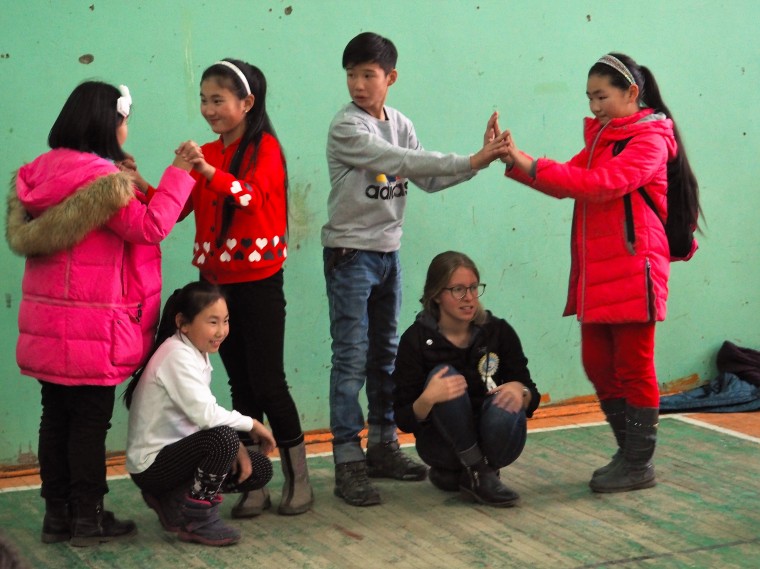
I stumbled out of my apartment building Friday morning at 7am, the only source of light being the car’s headlights. Despite the early hour, I managed a cheerful “Сайн байна уу” to the driver to which I only got a grunt in response. With my blue backpacking bag filled with snacks and clothes that was tossed into the trunk, my pillow, and camel blanket, I folded myself into the small car. I was on my way to Khentii, the birthplace of Chinggis Khan, with 20 Bookbridge students and my PCV site mates, Perrin and Jenni, for an English Festival.
It took 18 hours.
18 hours!
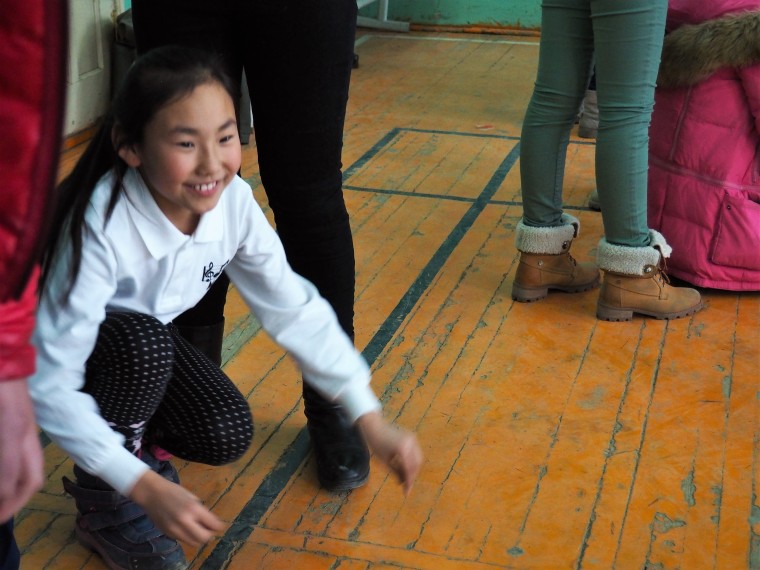

We left with two cars, the small car I was in and a Russian meeker that had 20 people crammed in. They looked like sad cows going to the slaughter. I thanked my lucky stars that I wasn’t in that meeker with them. My long legs wouldn’t have forgiven me. When we left our aimag, the sun was a red orb rising over the plains like a scene from The Lion King.
It was a tough journey. The drive to UB took nine hours, two hours longer then it would have taken by bus. We kept making stops because of the meeker driver. Nobody knew what his problem was. He was making far too many stops and driving at a sluggish pace. It was an agonizingly slow drive. I munched on peanuts, craisins, and carrots as my IPod played on shuffle.
“UB is just ahead of us.”
“I don’t see it.”
That’s because of the great plumes of steam and smoke erupting from chimneys, factory smoke stacks, and the ger district, creating a lovely blanket of smog that caused the city’s skyline to disappear. Transitioning from empty roads we were suddenly hit by a blitzkrieg of bumper-to-bumper heavy traffic. Terrifying when traffic laws are heavily lax here. We were making a left turn when another car thought it was a great idea to push a little harder on his gas pedal nearly crashing into us. But our driver was like, “NOT TODAY!” and stoically evaded the car while I nearly shitted myself in the back seat. I held on a little tighter to my pillow as if that would do something. We made some more stops in the city. Sadly, none of the stops was at a coffee shop and we resumed our journey out of the city and onto Khentii.
During the second part of the drive, it was pitch black with stars guiding our way. Cars in the far distance looked like fireflies as they descended from the hills; their car lights a small bright light in the murky blackness. We arrived in Chinggis Xot at 1 am due to the slow meeker driver. We had to chug behind him at snail’s pace to stay close to the students. At one point, we were driving 25 miles-per-hour.
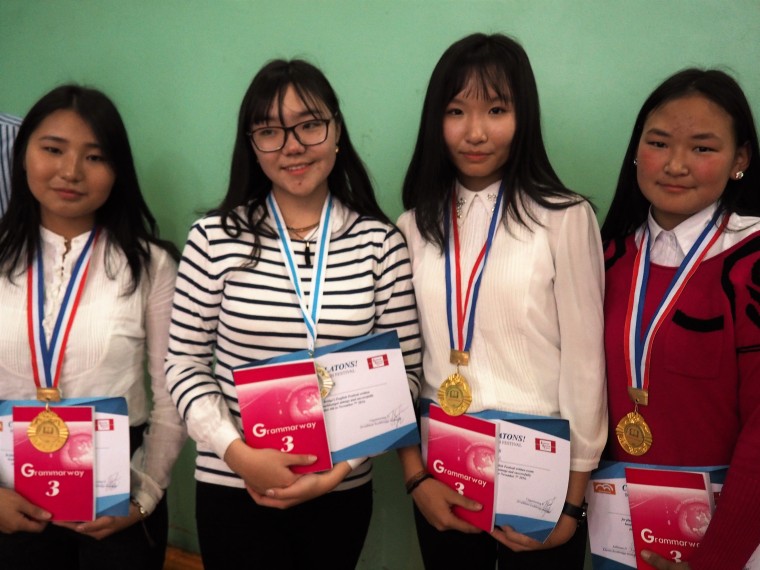
PCVs stayed with other PCVs in the aimag while Bookbridge students and faculty found their own accommodations. The lovely Phoebe and Mission, the cat, took me in for the weekend. On Day 1 of the English Festival, Bookbridge students from my aimag united with Bookbridge students from Khentii’s aimag. They all took a one-hour test that Jenni, Perrin, and I created for different grade levels. Our tests were vastly different from Mongolian tests because there was more writing and open-ended questions to avoid cheating. More than half did very well. Later in the afternoon, Khentii PCVs organized games for the students and there was an awards ceremony. Students with the top scores received medals, a certificate and an English grammar book. Afterwards, we disbanded. Students were still exhausted from the long drive. During Day 2 of the festival, students played basketball and volleyball in the morning, we went over test corrections in the afternoon, and then watched Harry Potter and the Sorcerer’s Stone in the evening.
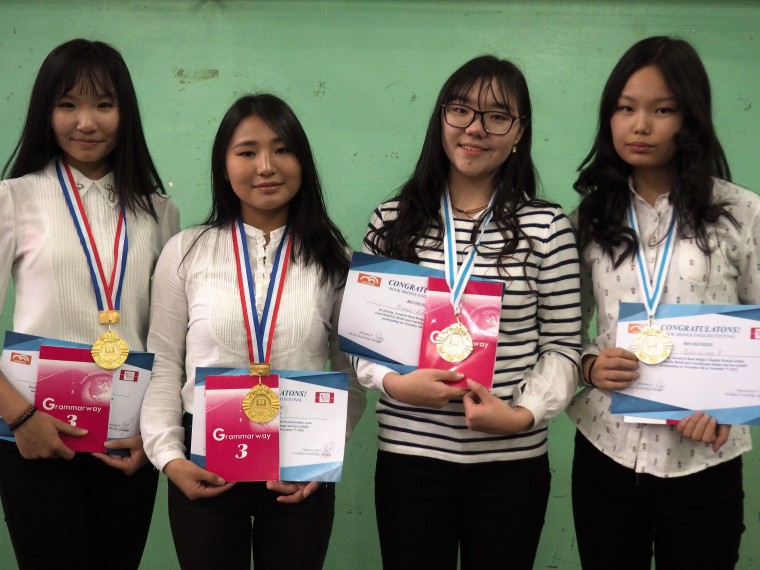
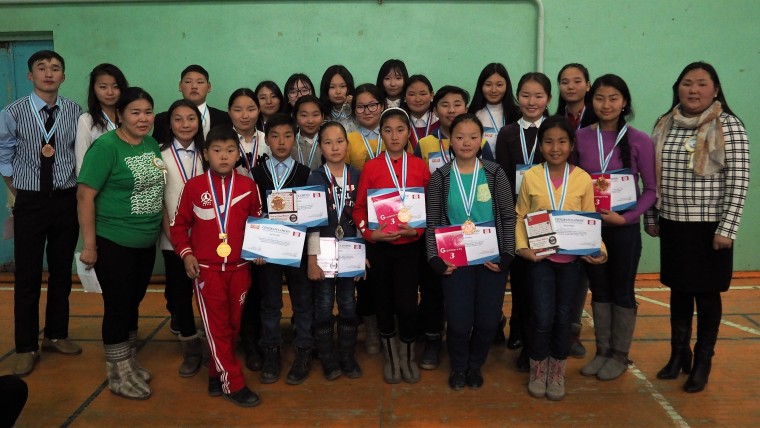
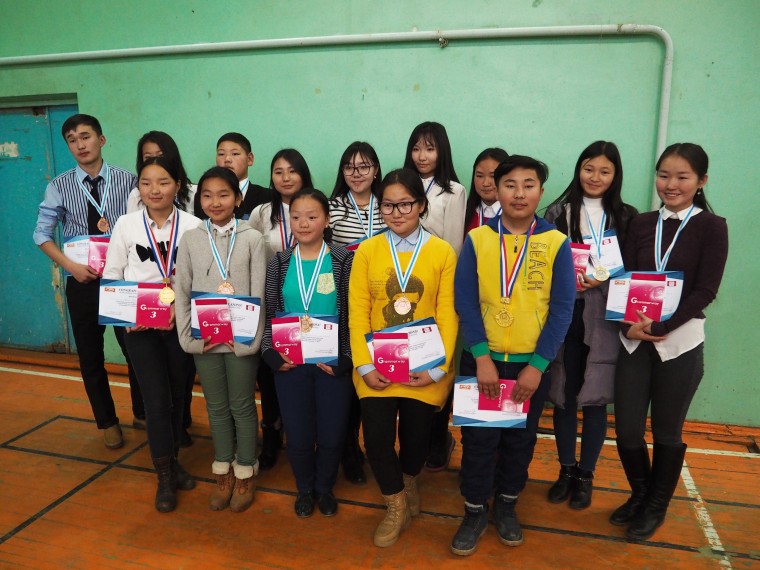
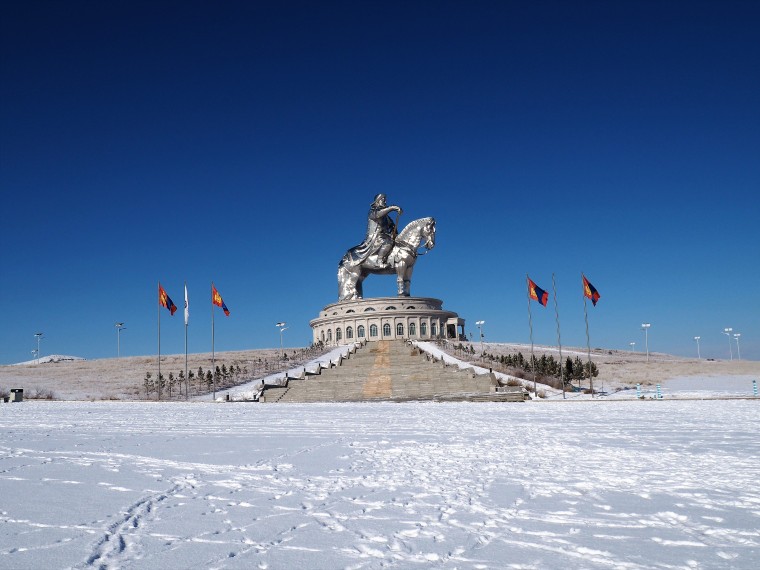
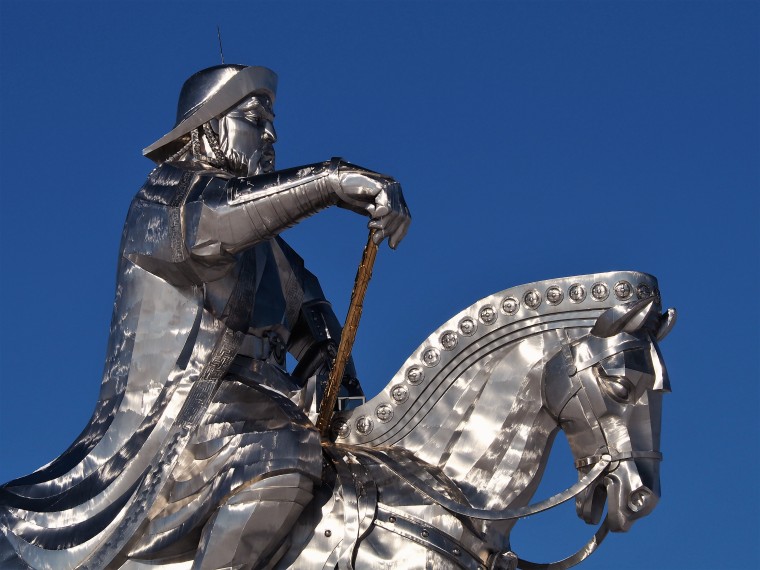
We didn’t leave Chinggis aimag until Monday morning at 9 am. Before entering UB, we hopped out of the car for a few minutes to gaze upon the enormous Chinggis Khan statue. With daylight we could also see the landscape that escaped us Friday night: flat with small hills and eagles that sat puffed up on the snowy ground. In UB, we had a two hour break and spent it in E-Mart, a Korean superstore. I devoured a large pizza for lunch. The traffic was so bad. It took nearly two hours to get out of the city. We didn’t arrive back home until midnight. Our driver must have been exhausted from driving all day and night. I kept a wary eye out for him just in case.
“Are you keeping an eye on him?”
“Yeah, he’s staring straight ahead.”
“It’s hard to tell if he’s swerving because of all the potholes.”
It was a nerve-wrecking ordeal. Trucks with their headlights blinded our eyes and horses standing at the side of the road wouldn’t materialize until the very last second, including three dead ones. We were all exhausted and I was happy to come back to my apartment. However, I came home to a leaking radiator. More on that thrilling tale to come later.

September and October in Mongolia
See through my eyes what I’ve been up to since Peace Corps training.
Song: Can’t Wait to See You Again by Alan Walker, Martin Garrix ft. Sia.
Happy Halloween
Happy Halloween!
Happy birthday, Chinggis Khan!!
No school!!!

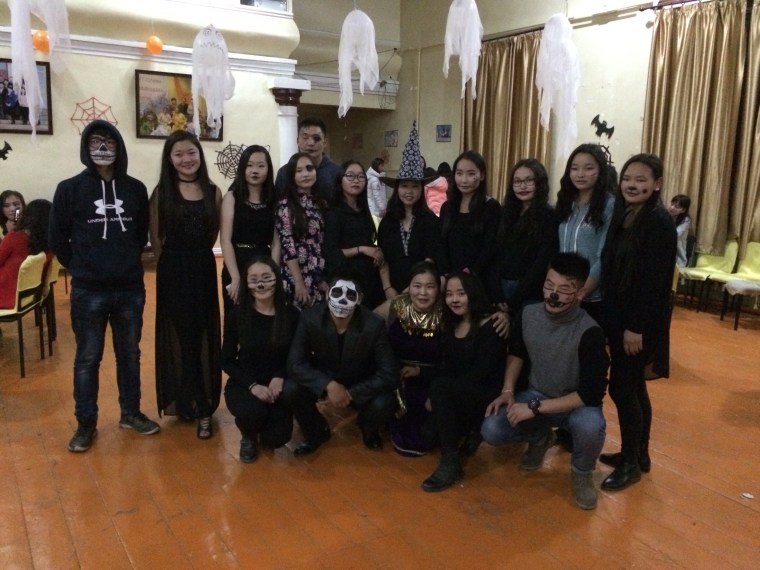


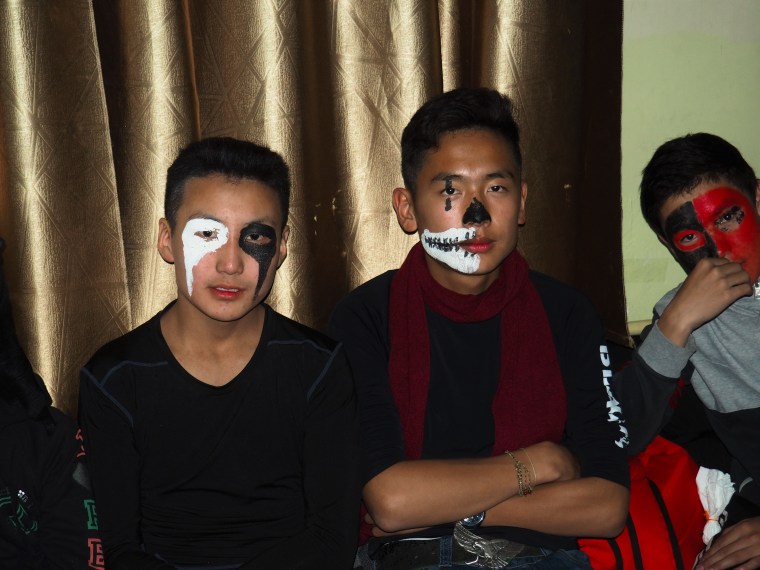
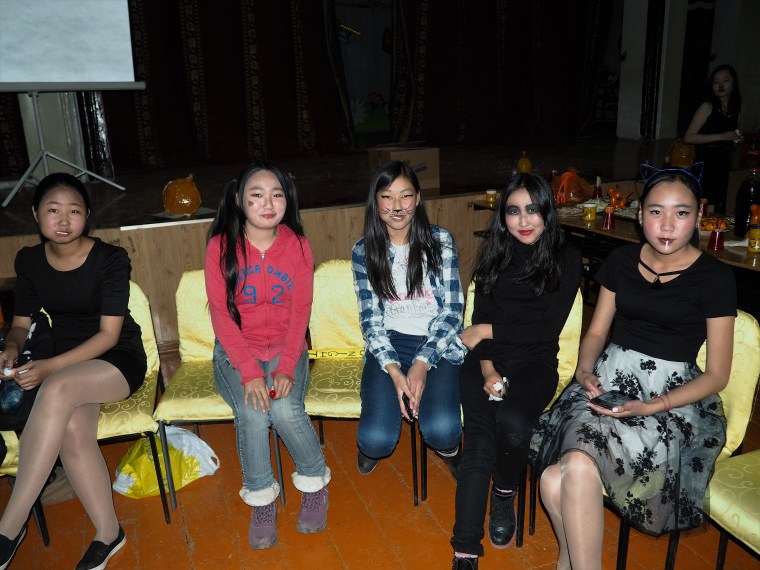
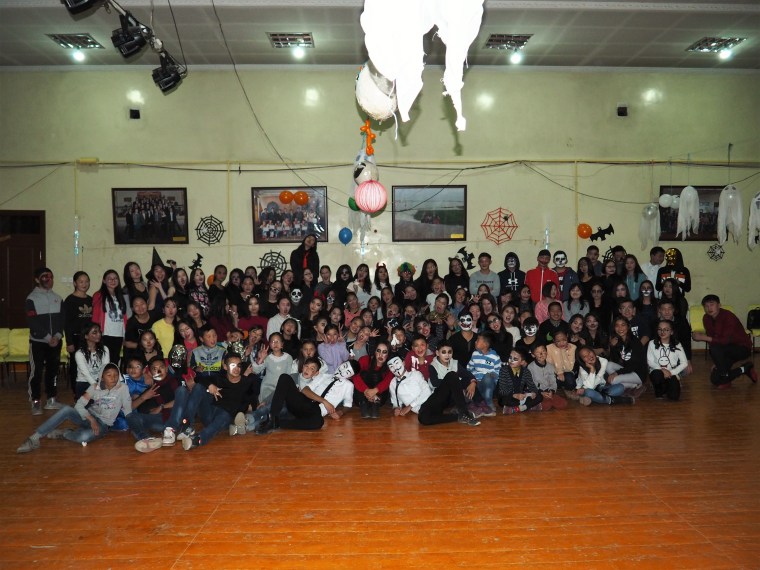
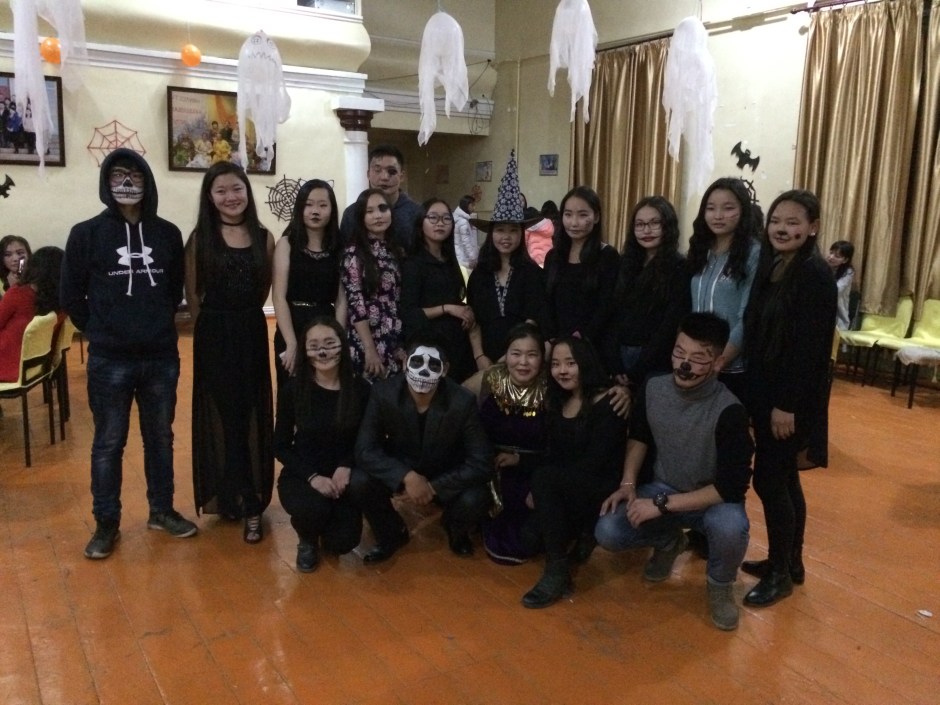
There was no school on Halloween which is also Chinggis Khan’s birthday. 12th graders created all the decorations for their spooky Halloween party, baked all the food, and had games to play. They painted their faces, made home-made witch hats, wore creepy masks, and sported cat ears. There was even a live cat meowing constantly behind a curtain.

The Chatty Bunch
Peach Oolong, Forest Berry, Jasmine, Organic Spring Jasmine, Vanilla, Green Matcha, Green Tea Tropical, Organic Breakfast, Chamomile, Apricot Green, Ceylon, Mint, Mango Black, and English tea. Anybody who knows me knows that I need a lovely hot cup of tea every day.
Three times a day.
Living in Mongolia is no exception as my kitchen shelf is weighted down by all my bags of teas. Now that it is November and the temperature has significantly dropped, there is nothing I love more than to be done with work and to power walk back to my warm and comfortable apartment where my tea, camel blankets, and Kindle await me.
Note to readers: I have recently finished reading the first two books in a new series called, “The Seven Sisters,” by Lucinda Reily. I’m obsessed. The first book is based in Brazil and the second in Norway. Third book comes out next year. To help ease the long wait, I’m trolling away on Reily’s website.
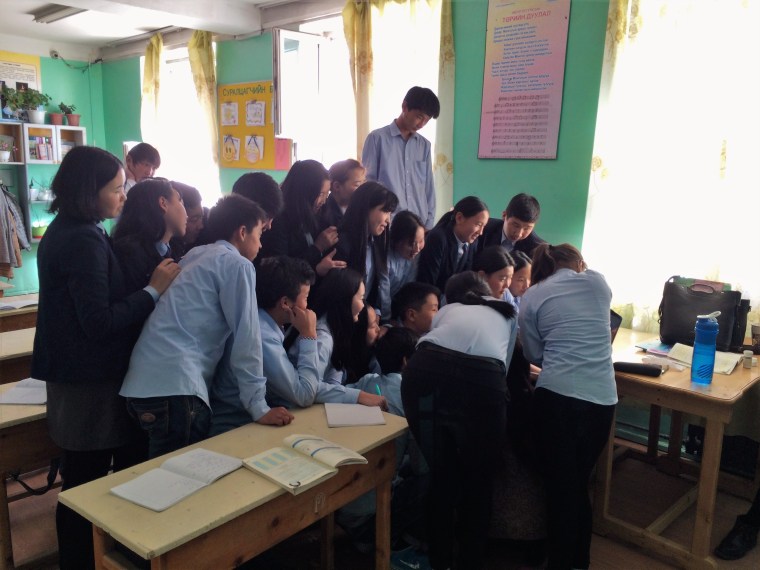
I don’t get bored here. I’m content. During the week days, I spend long hours at the school with lesson planning, teacher development, co-teaching, and with my speaking club. Many 6th graders come to my club every Tuesday. However, a counter part is unavailable – (or becomes conveniently busy) – so I am left alone to wonder how I can explain instructions and English words to small children. I’ve come to realize that it doesn’t matter what I say. They just love when I’m rambling away in English and teaching them nursery rhymes and The Beatles’ “Hello, Good Bye.”

On the weekends, I get invited over to my counterpart’s home where they generously feed me.
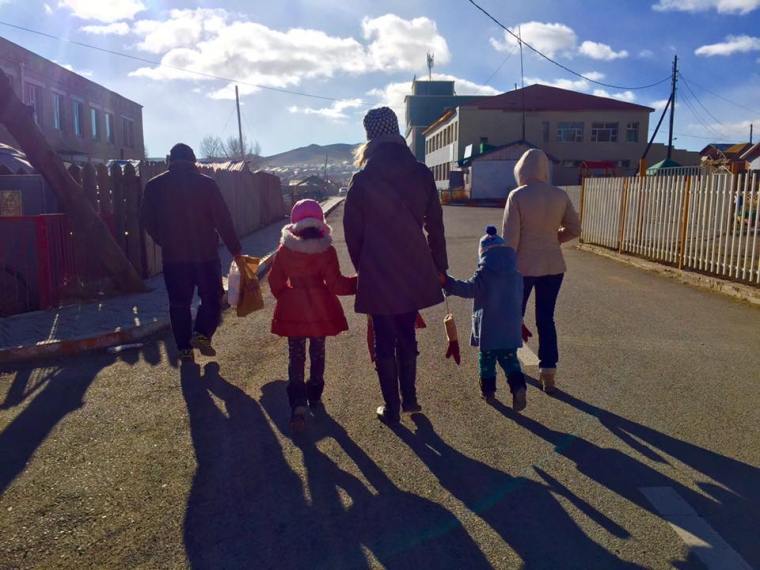
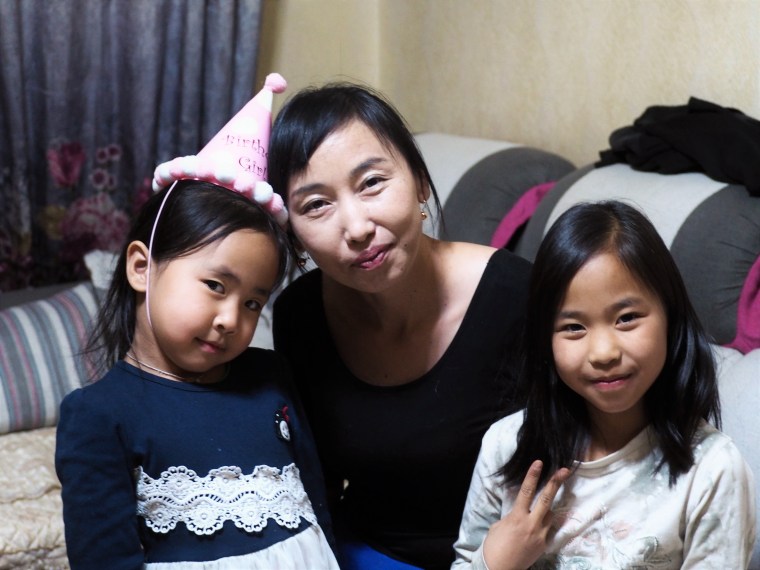
I shop in the markets and explore buildings where sometimes it feels like I’m wandering in a maze. A narrow hallway leads me through a copious amount of clothing stalls that are now overcrowded with puffy winter jackets; cosmetic counters littered with nail polish, Japanese eye shadow, toothbrushes, and small tubs of face whitening cream; food stands of Khuushuur and buuz that have been sitting there dormant for hours; and window displays of stunning winter deels. People push past in these close quarters so I keep my hands firmly in my pockets.
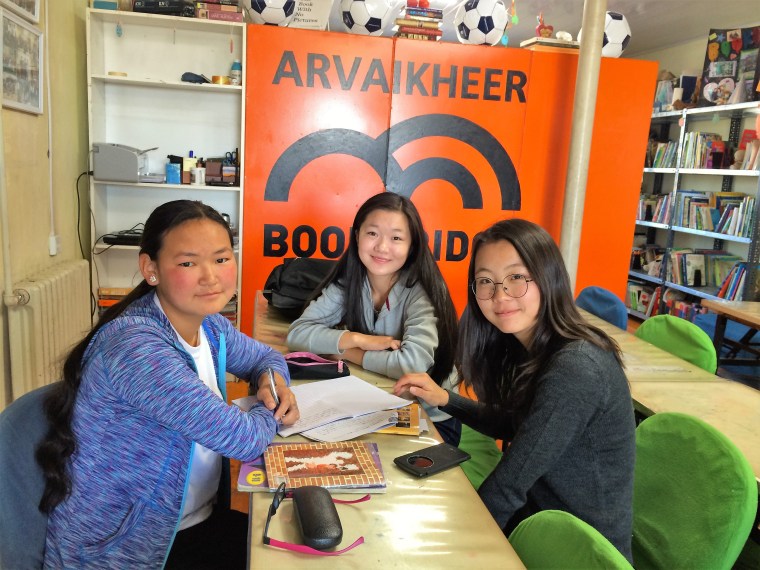
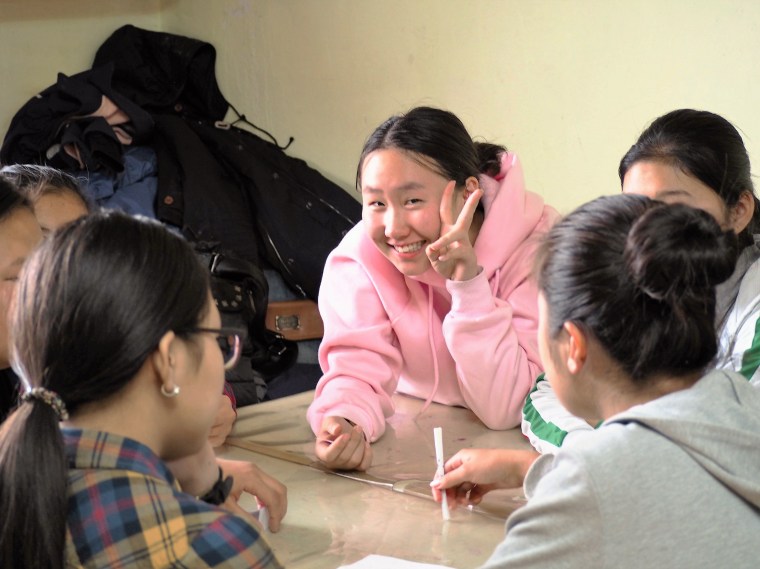
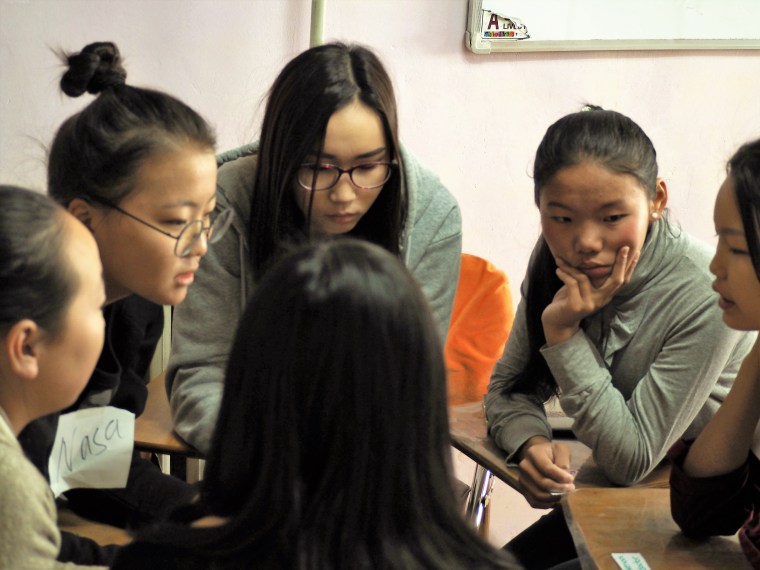
I also assist with the Speaking Club – The Chatty Bunch – at Bookbridge Learning Center. Bookbridge was founded in Germany. Founded by my fellow PCV, Jenni, the goal of our speaking club is to not just be better English speakers but to become confident public speakers. With the help of our fearless leader, Uuganaa, we meet on Saturdays at 10am. We have accumulated a group of 40 students from all four schools.


My next blog post will be about my trip with Bookbridge students to eastern Mongolia for an English camp.

Teacher’s Day
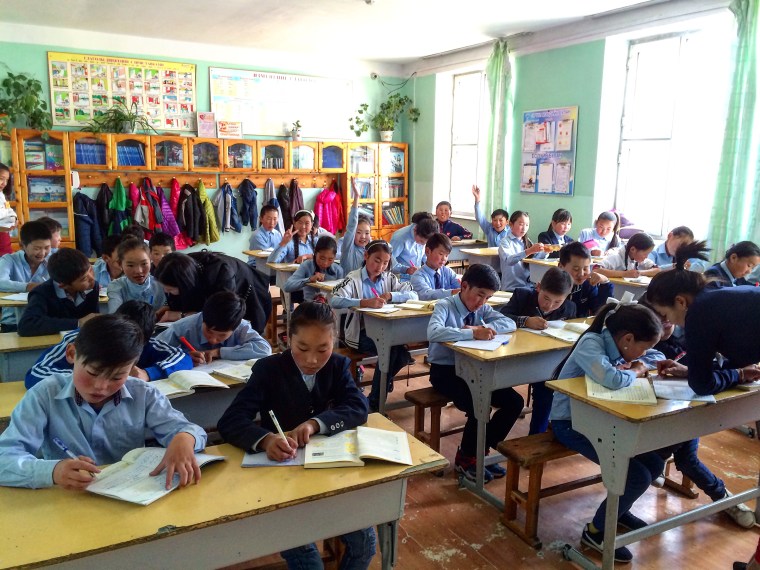
The role of a teacher in Mongolia is reveled. Students respect their teachers and a teacher’s dedication to their job and hard work is rewarded every year on the first week of October, National Teacher’s Day. This is a week-long celebration. On 30 September, 12th graders became the teachers for the day while teachers took the day off and had sport competitions all day and night.
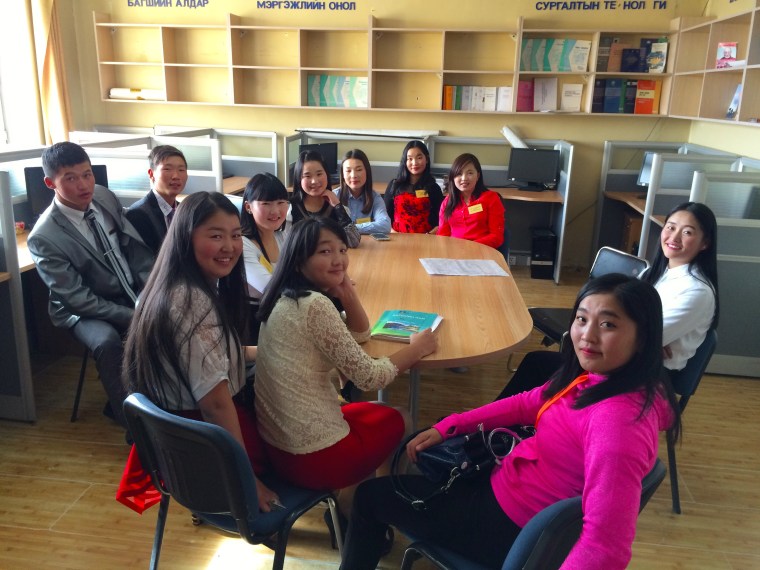
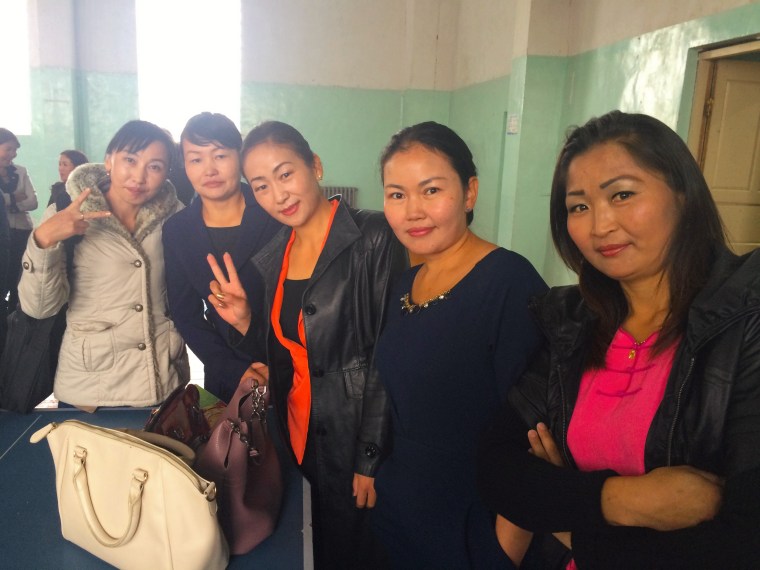
I rocked up to school wearing my sneakers and volleyball outfit. I just love how everyone assumes I’m a volleyball expert because I’m tall. I usually end up kicking the ball. I didn’t know that all the teachers would eventually change into their sport outfits later. So for the first three hours, I felt very much like an awkward kangaroo, just bouncing on my heels waiting for my counterparts to change out of their fancy dresses and high heels.
Volleyball would have fared better if the ball hadn’t been rock-solid. It seemed every time that the ball ricocheted off of an arm an expletive was heard. The entire competition lasted until 2 AM. Nevertheless, we English teachers came in 2nd place and got silver medals for our bruises, sleep deprivation, and sportsmanship. In between games, we played table tennis. Teachers also bought food and drink. I went the lazy route and bought bags of chips while my counterparts make khuushuur, soup, and buuz. A thermos of hot milk tea and bottles of vodka and wine decorated the table but I had to pass on the first two due to it being 9 AM. I definitely would have been awful at volleyball if I had gone down that road.
Like Stanley Stewart wrote in his book “In the Empire of Genghis Khan:” “When Mongolians party the rest of Asia locks its doors.” I can wearily support this statement.
At 8 PM, the volleyball competition was put on pause and was replaced with an assembly. Teachers rushed to switch outfits. The lights of the gym were dimmed and music that sounded like music from an action movie trailer started to play. All the 12th graders stood in two long lines on both sides of the gym, clapping and cheering for all the teachers as we walked down the middle. It felt like I was being applauded for winning a medal of valor. The director of the school made a speech and there were singing and dancing performances. I managed to not clumsily trip my way through the Mongolian waltz.

On 6 October, teachers from all the schools in the aimeg gathered together in the theater for an awards ceremony. There were many long and tedious Mongolian speeches. I found myself nodding off as unintelligible Mongolian was spoken, awards were awarded and pictures were taken on stage. Thankfully, the award ceremony ended and a concert began. This concert was incredible! It was every tourist’s dream who visits Mongolia. Teachers played various instruments such as the horsehead fiddle. Gorgeous outfits were worn. There was dancing and singing including throat singing. Also, when Mongolians clap, they clap together in unison.
After the concert, everyone scattered to their respected school’s party at a venue. My school’s party was held at the Wedding Palace. Dinner was served while more speeches were made and more teachers won awards. Vodka was being chugged at such as speed that I didn’t think anyone was going to show up to school the next day. The entire week was a whirlwind as I celebrated a new holiday in my new home.
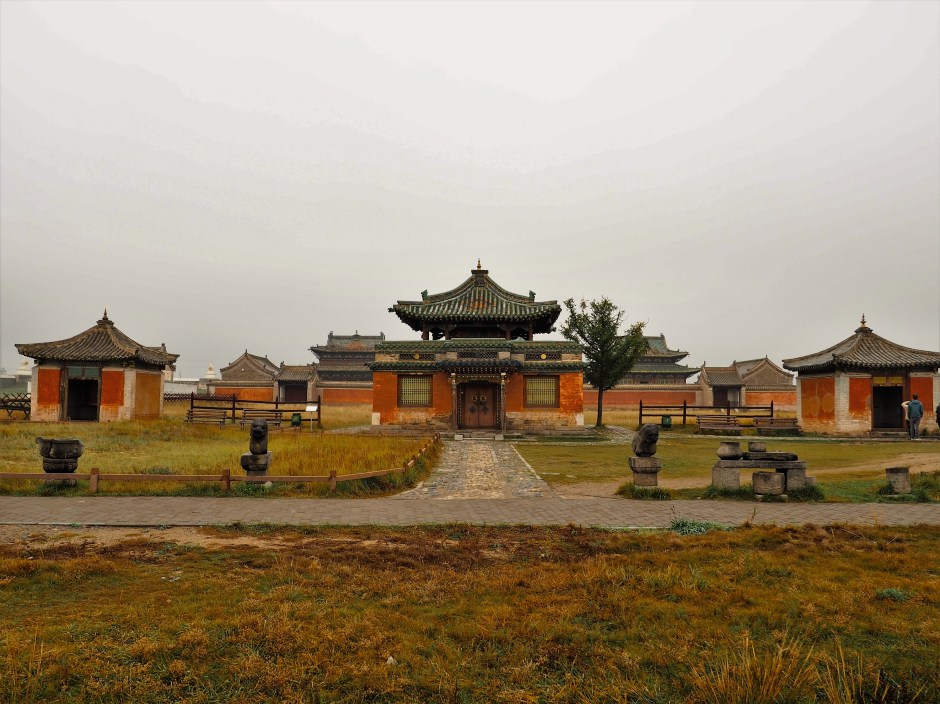
Kharkhorin
At 9am on Saturday morning in a private car, me and my site mates left our aimeg for Kharkhorin – a “super” soum lying in northern Övörkhangai Province.
This particular soum is referred to as a “super” soum not just because of its size but because of its tourist appeal. Many tourists come to Kharkhorin to visit Erdene Zuu Monastery and the famous phallic rock that continues to humorously serve as a reminder for monks to remain celibate but yet also symbolizes fertility. The land had also once been the capital of the Mongol Empire under Ogedei Khan.
During my training, I had gotten used to the bumpy rides over fields and dirt roads. But since arriving in my aimeg back in mid-August, I hadn’t been on a bumpy road trip in two months. There was a moment when I thought I was going to get ill. It was a three-hour drive to the soum. The car rode smoothly on a paved road for 30-minutes until our driver made a left onto a narrow dirt road. For the rest of the ride, we followed this trail that winded its way like a snake over fields, streams and through stunning valleys. The hills are sparse of vegetation. I saw some trees clumped together in pockets between hills or upon the foothills. Their leaves were bright yellow, a cheerful bright color amongst the never-ending shades of greens and browns.

Kharkhorin is large with roads and sidewalks traversing around its markets, restaurants, schools, gers, and homes. Kharkhorin made itself comfortable on the lower end of the Orkhon River and upon the eastern foothills of the Khangai Mountains. The Orkhon River is part of UNESCO’s World Heritage Site Orkhon Valley Cultural Landscape.

On top of a hill is a massive oovoo surrounded by thin walls depicting the stages of the Mongol Empire.

For centuries, the Orkhon Valley was believed to be the seat of imperial power. Now, the valley continues to support Mongolia’s nomadic traditions.

An abandoned mill house adorns the bank of the river. Now its only visitors are spiders, cobwebs, and birds.
 Tourists can stay in ger camps that offer beautiful scenery of the river and hills.
Erdene Zuu Monastery survived the communist purge of all Buddhist monasteries in the country. Joseph Stalin ordered for this monastery to remain in tact to show international visitors that there was some toleration of religious freedom. The monastery is surrounded by a high wall in a square-shape enclosure with 108 stupas sitting on top. Visitors can walk in for free.

The Temple of Dalai Lama.
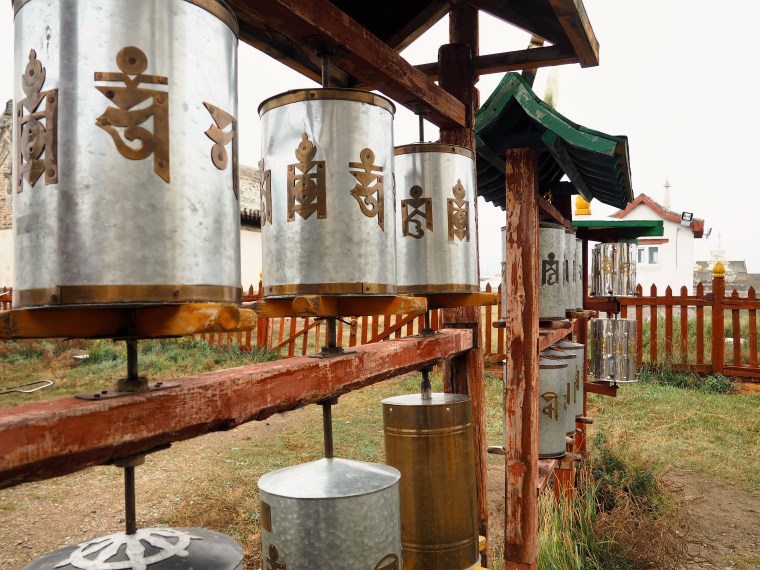
Family, friends, and visitors can spin these canisters to show respect for the dead. They wrap all the way around the monastery.
Here is a list for more monasteries to visit in Mongolia.
http://mongoliatravel.guide/things_to_do/view/monasteries-temples-in-mongolia/
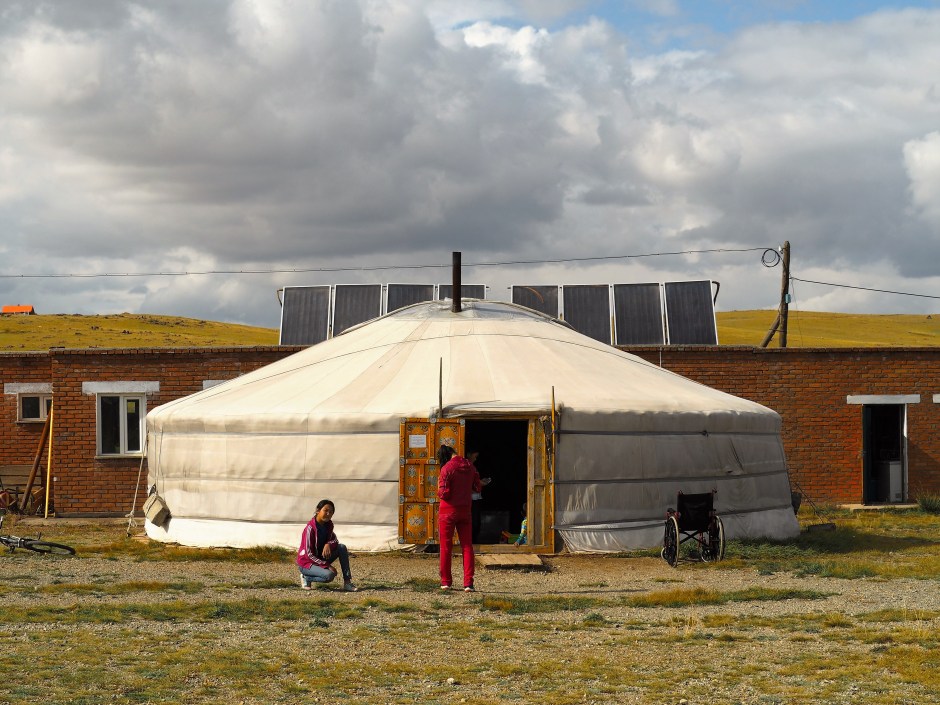
Winter is coming
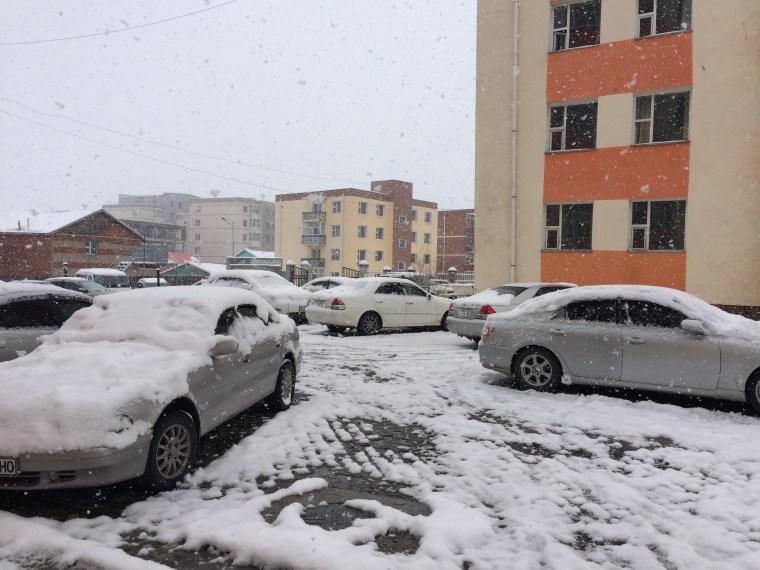
On 25 September, the first snow flurries fell from the sky. Never have I seen snow fall this early in the year.
The hills and steppe were covered in a white powder of snow. I was in a car coming back from Kharkhorin when the sky began to piss down with rain. The rain then transformed into snow.
Luckily, I had forced my winter gear into my suitcase. I have with me my…
- Layers of under armor
- Warm leggings
- Thick socks
- Two hats
- Winter boots
- Patagonia sweater and jacket
In Mongolia, I have bought warm and comfortable camel socks and two camel blankets for my bed. Camel socks are great because they aren’t itchy. In the future, I hope to obtain a winter deel. Chicago is a cold and windy city. I survived the storm of “Chiberia” in January 2014 and many blizzards. The only difference with Mongolia is how early winter arrives and I still don’t have hot water and heating.
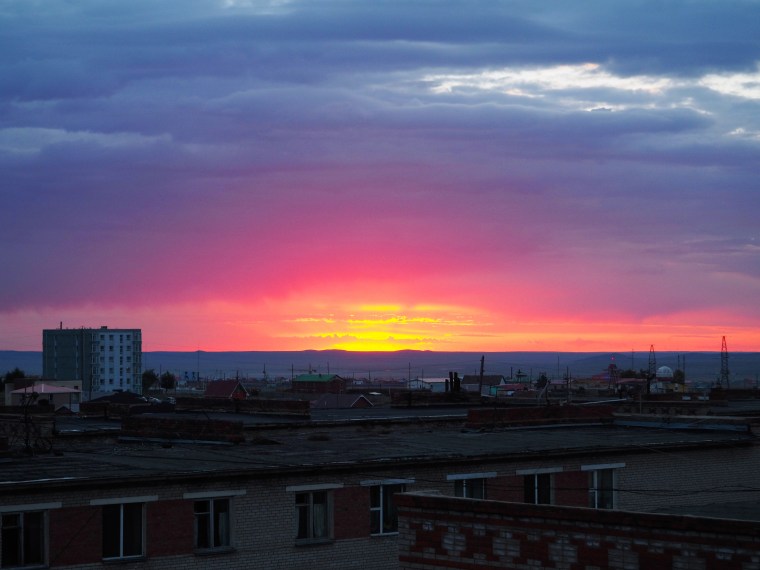
My fridge door is finely decorated with long strips of duct tape. It is the only way to keep my fridge door closed – (If you are a future Peace Corps Volunteer in Mongolia, pack your duct tape!!!) Sometimes my toilet doesn’t fill back up with water so I give it a few slaps and hits. I won’t get hot water and heat until 1 October – a day I have been eagerly awaiting. I also have no internet and must rely on my school’s internet and free Wi-Fi at many hotel restaurants.
Despite my minor problems, my apartment if feeling more like home. When I first arrived, I had nothing. I had two chairs, a small coffee table, and a bed frame. I have slowly been accumulating everything to make my home comfortable and livable. Now all I need is a toaster oven!
So what do I do in my free time? I switch back and forth between watching Law and Order and The Office depending on my mood. I finished reading all eight books in the “Outlander” series. My Kindle has 80 books waiting to be read. I walk around my aimag with my site mates: climbing hills, going on long walks, and meeting new people.


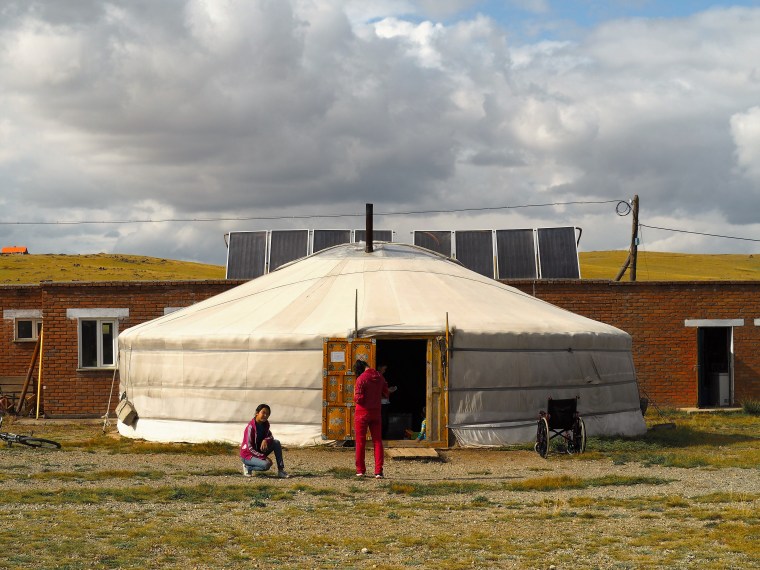
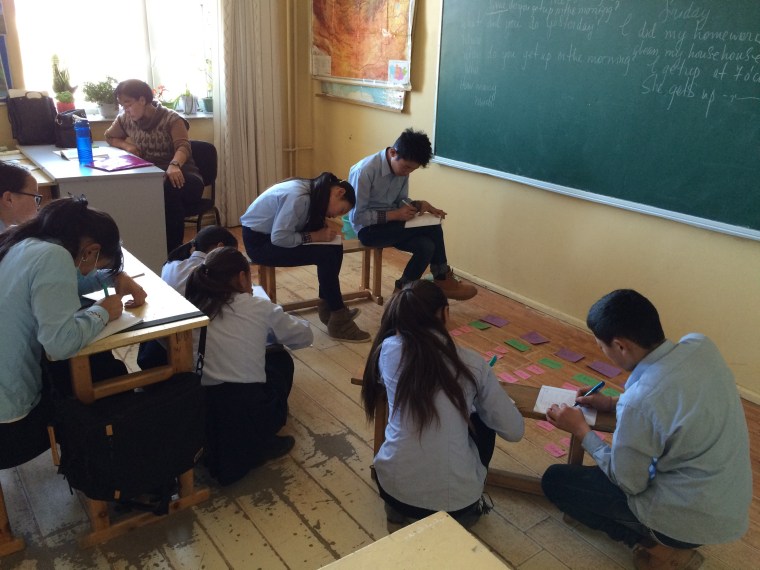
I enjoy teaching at my school. Grade levels range from A to G and I co-teach in a lot of classes. My goal is to help with creative thinking. What can we do to make learning grammar and book work more interactive, engaging, and will allow students to work together as a group? This is what I tackle while lesson planning with my counterparts. Students love playing competitive games, using music as a learning tool, and are obsessed with stickers.
 Peace Corps Mongolia